
Quality, Environmental, and Occupational Health and Safety Management Policy.
STM’s commitment is long-standing: to become a leading supplier in both European and international markets—for conveyor belts and automotive components alike—we recognize the need to adopt and adhere to a rigorous quality management system that respects the surrounding environment, while also implementing comprehensive measures to manage workplace health and safety.
Our primary goal is to become a strategic supplier for our customers, providing both conveyor belts and automotive components. STM aims to play a proactive role in understanding the ever-evolving market, ensuring we remain at the forefront of both sectors.
The STM Group seeks to drive innovation across these markets, fully aware that our customers’ success is our own success.
Read our full quality policy by clicking below.
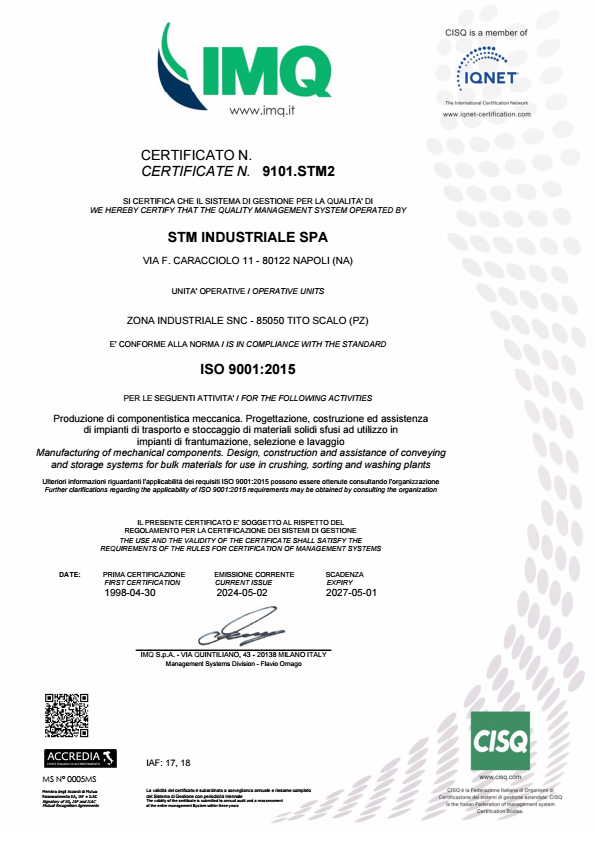
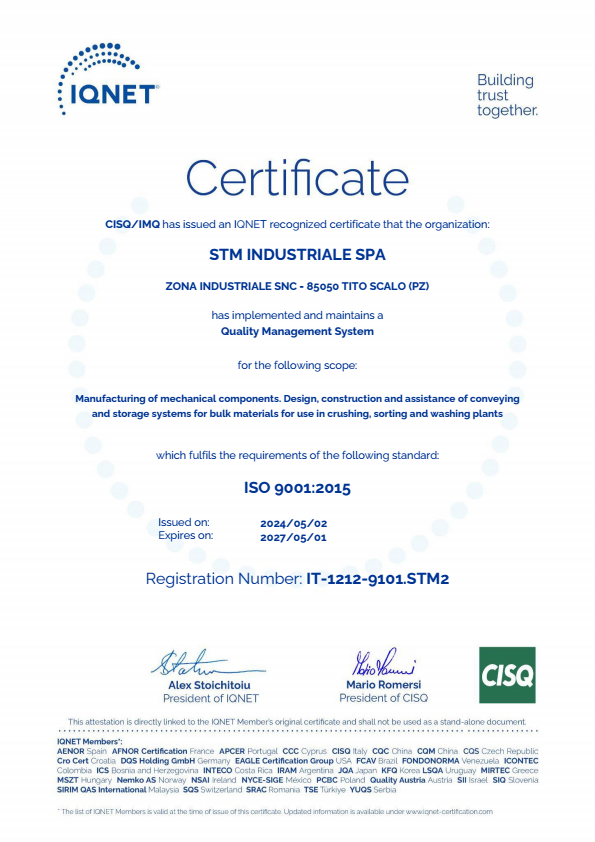
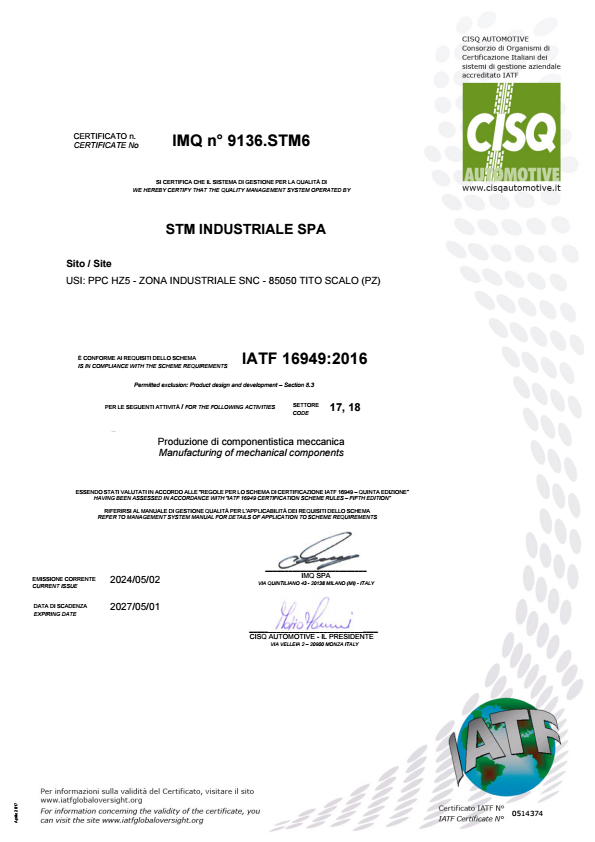
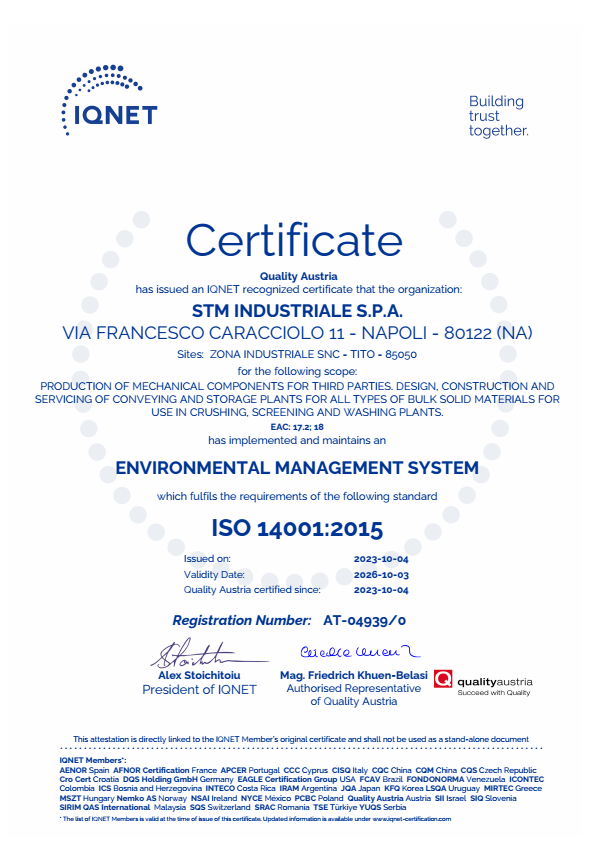
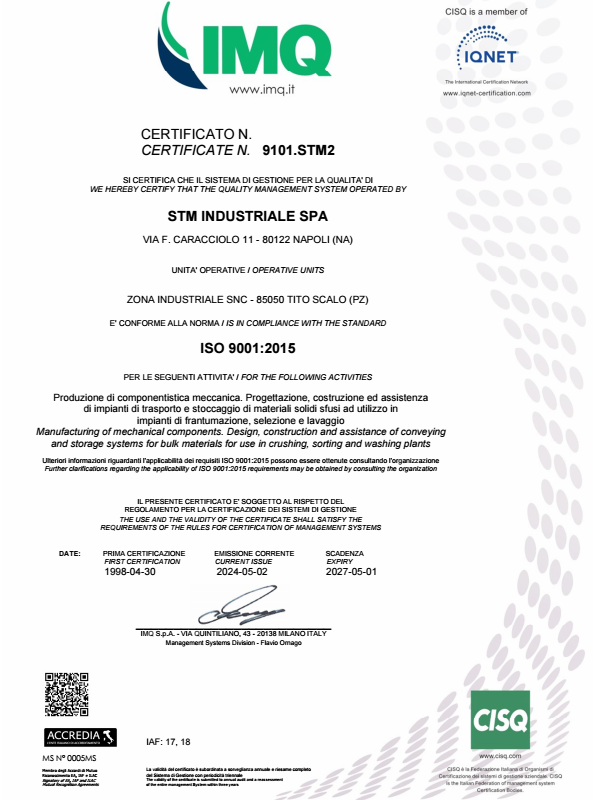
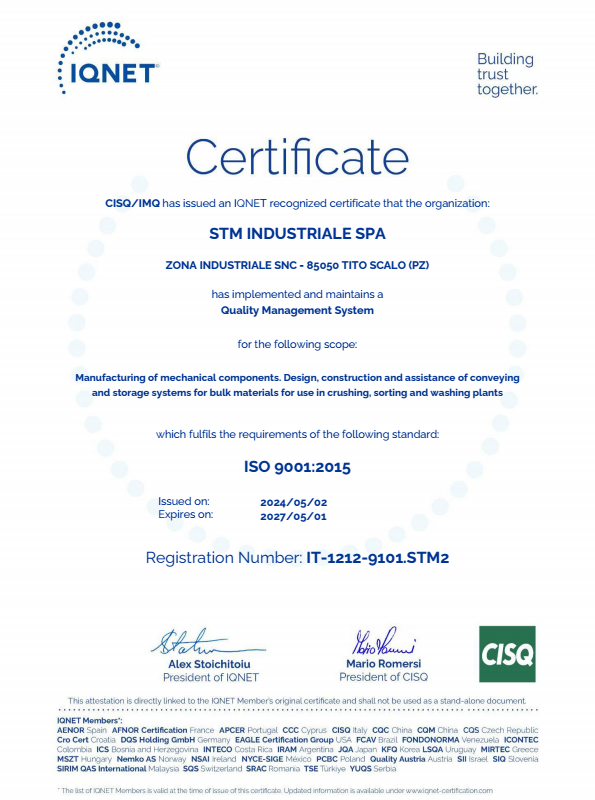
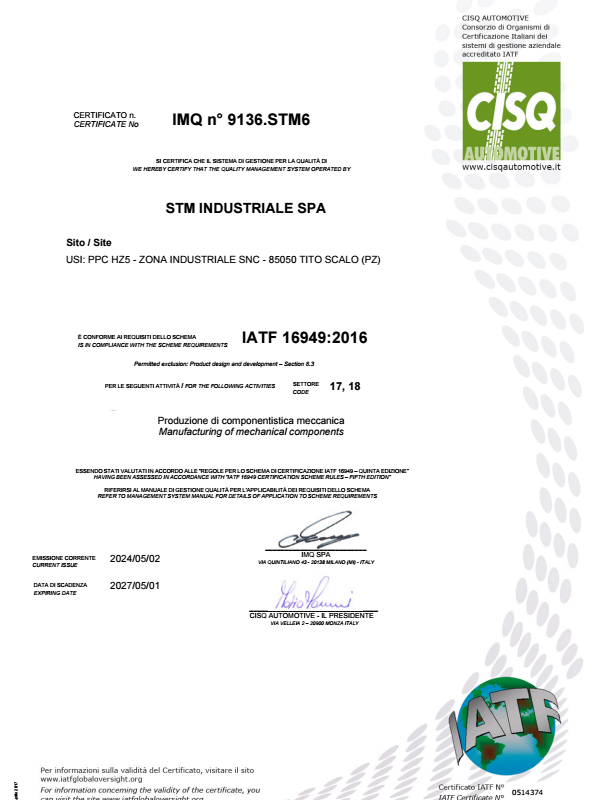
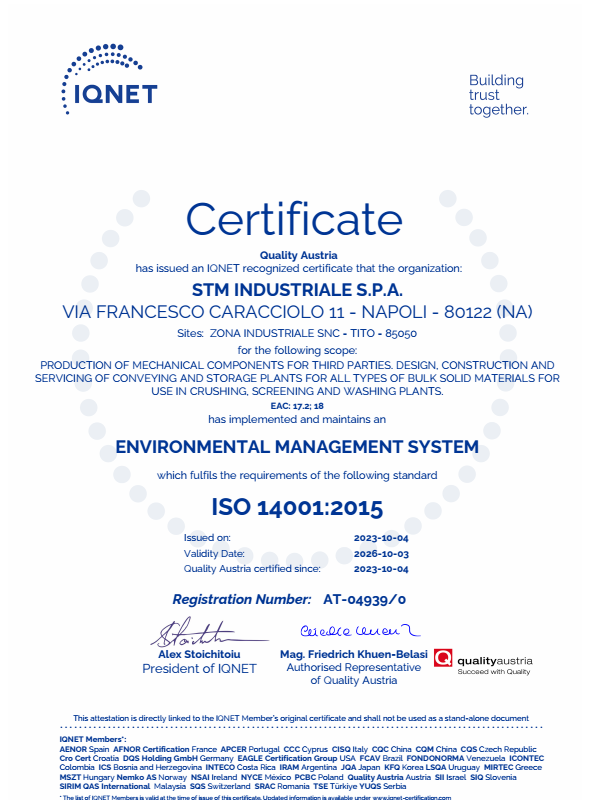
Demonstrating the STM Group’s commitment, our Quality Management System is certified in accordance with ISO 9001:2015 and ISO/TS 16949:2016 quality standards, as well as the ISO 14001 environmental management standard.
These certifications undergo regular review to enhance the management system’s effectiveness and ensure alignment with the highest quality standards.
We are also in the process of obtaining ISO 45001 certification, further underscoring our commitment to upholding the highest standards—not only in production but also regarding the environment, health, and safety in our workplaces.
Maintaining operational standards that consistently meet these benchmarks is a challenge we are ready to embrace and are dedicated to upholding, both now and in the future.
Maintaining operational standards that consistently meet these benchmarks is a challenge we are ready to embrace and are dedicated to upholding, both now and in the future.

Gender Equality Policies
At STM, we believe that valuing our people requires ensuring equal opportunities at all levels of the organization. To this end, we have embarked on a process to align with the UNI/PdR 125:2022 reference practice—guidelines that define a gender equality management system based on measurable performance indicators (KPIs).
This practice, introduced as part of the gender equality certification framework established by the Code of Equal Opportunities (Legislative Decree 198/2006, Art. 46-bis), identifies six areas of action: culture and strategy, governance, HR processes, opportunities for growth and inclusion of women within the company, gender pay equity, and support for parenthood and work-life balance.
The tools we have adopted
Our commitment translates into concrete procedures and policies:
Setting objectives for senior management
Gender equality is being incorporated into management objectives—with clearly defined responsibilities and periodic performance reviews—because cultural change begins with those who lead the organization.
Plan for the prevention of abuse and harassment
It defines unacceptable behaviors, prevention measures, and reporting channels to ensure a respectful and safe work environment for everyone.
Internal and external communication procedure (Rev. 1)
Ensures that the language and content disseminated—both within and outside the company—are consistent with the principles of inclusion and respect for differences.
Work-life balance procedure
Identifies tools and measures to support the balance between professional and personal needs, including those related to parenthood and caregiving.
Career management procedure
It establishes transparent and objective criteria for professional growth, ensuring that each individual’s development depends on skills and merit.
Selection and hiring process
Ensures impartial search and assessment processes based on objective criteria and free from discrimination.